
Why the Internet Keeps Getting Modern Warfare Wrong
Modern Warfare Myth: Can Cheap Drones Actually Defeat a Superpower?
A Weapons Freak Analysis of the “$50K Drone vs $1M Missile” Narrative
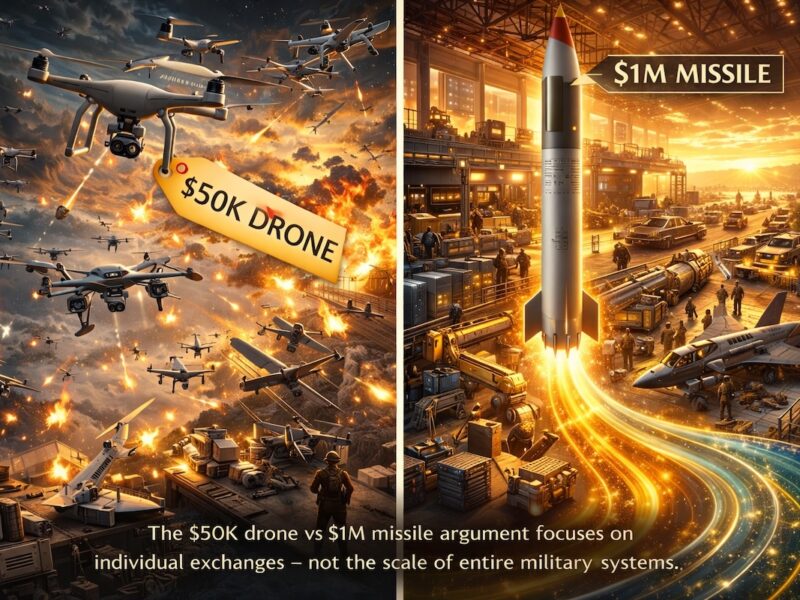
The “$50K drone vs $1M missile” argument is going viral across the internet right now.
The problem is that the equation only works if wars stay small.
Let me start this listing by saying that I’m not “pro-war” in any sense of the word. As a Christian, I understand that men have a fundamental spiritual problem and just as Jesus stated, “the poor you will always have with you…”, so too mankind will always have a reason to go to WAR because of differences in ideology, economics, opinions, or just ego.
My opinion is that WAR is inevitable, it will increase in this world until God decides to call in the cards for mankind, which may be sooner than later. I’ve also written a book about where I believe the world may be heading from a Biblical perspective. If you’re curious, you can find it at WickedDarkness.com. It’s definitely not a mainstream narrative by any means, but I figured as long as I’m writing a listing here about the WAR with Iran, I would throw it out there.
The Social Media Perspective
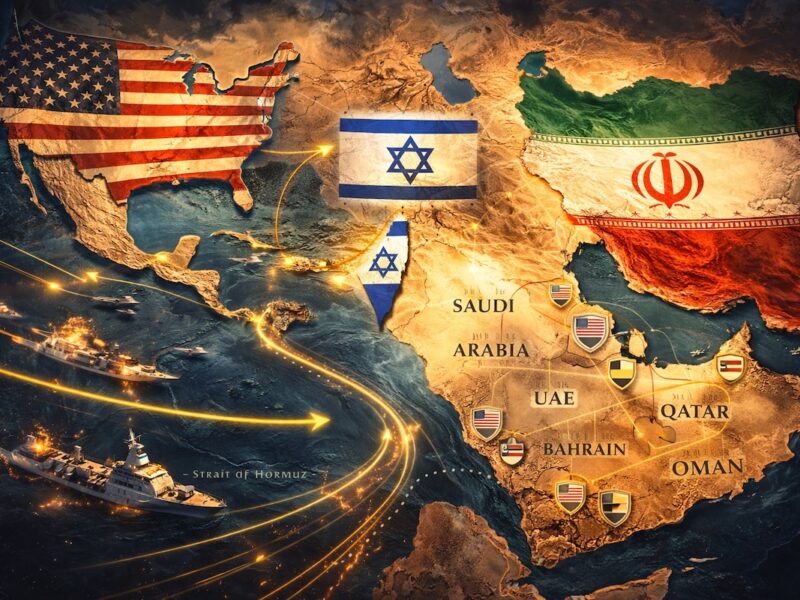
Yesterday on X, I watched a debate unfold about whether Iran could “bleed U.S. defenses dry” using cheap drones and missiles.
It’s a fascinating example of how modern warfare is often misunderstood online.
Because the argument sounds logical… but it misses something fundamental.
The video that has sparked much of this debate is a short clip circulating online that has already been discussed by millions, forming their opinions about how a war between Iran, Israel, and the United States might unfold.
In the clip, Professor Jiang (@ProfessorJiang_) was interviewed during commentary on Breaking Points (@BreakingPointsN).
His claim was simple — and dramatic.
I included the video clip at the bottom of this listing so you can watch it after reading this analysis.
According to the argument, Iran could defeat the United States and Israel in a prolonged conflict because of production asymmetry.
The math presented looked something like this:
• Iranian drones cost roughly $50,000 each
• U.S. interceptor missiles can cost $1 million or more
The claim continued:
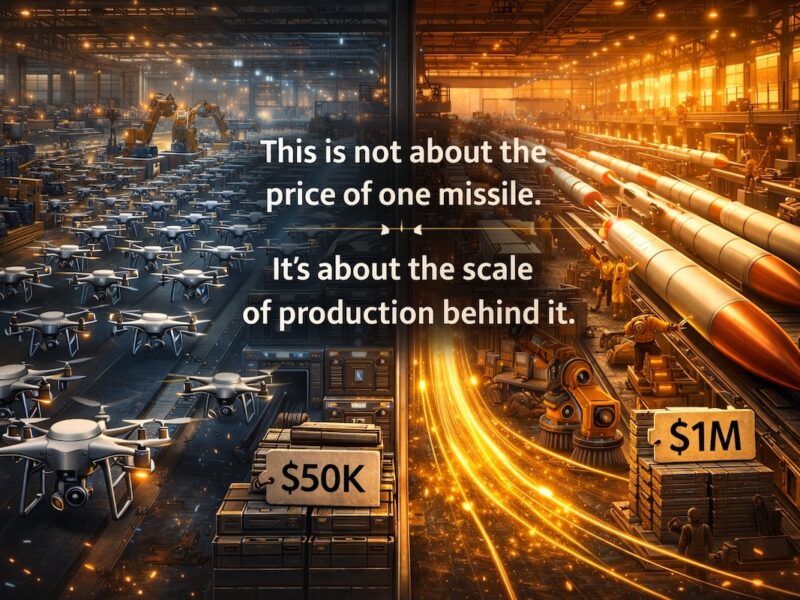
Iran could produce 1,000 drones per day
The United States could only produce around 100 interceptors per day
Therefore, according to this theory:
U.S. and allied air defenses would eventually run out of interceptors, their defenses would collapse, and Iran would win a war of attrition.
The argument has spread rapidly across social media because on the surface it sounds logical.
Cheap weapons beating expensive weapons.
Mass production overwhelming precision technology.
The claim is that the United States and the Military Industrial Complex are not designed to fight a modern war — and that’s why they would lose a war with Iran.
But there’s a deeper question that rarely gets discussed in these debates.
And it changes the entire equation.
The Assumption Behind the Attrition Argument
The “$50K drone vs $1M missile” argument only works if the conflict remains limited and defensive.
In other words:
• Iran launches drones
• U.S. and allied defenses intercept them
• The exchange repeats endlessly
Over time, the expensive side supposedly collapses.
But this assumption depends on something critical:
The conflict never escalates beyond that narrow exchange.
Historically, that’s rarely how wars between major powers actually unfold.
Tactical Annoyance vs Strategic Defeat
There is an important distinction in warfare that gets lost in online debates.
The difference between:
tactical disruption
and
strategic defeat
Cheap drones can absolutely create tactical problems.
They can:
• harass defenses
• force expensive responses
• strain logistics
• create psychological pressure
But tactical disruption is not the same thing as defeating a global superpower.
The 800-Pound Gorilla Problem
When people compare:
$50K drones vs $1M missiles
they are focusing on individual exchanges, not the total military capability of the actors involved.
The United States spends roughly $1 trillion per year on defense.
It has:
• global logistics networks
• massive industrial capacity
• layered military capabilities
• weapons systems far beyond drones and interceptors
When a superpower truly commits to ending a conflict, the battlefield rarely remains limited to one weapon exchange.
As I said in my Twitter response to someone making this claim:
“The issue is that this post claims the U.S. is going to be defeated by Iran. That’s like saying an 800-pound gorilla is going to be decimated by a spider monkey because it has more peanuts to throw at it.”
Their response was interesting:
“It depends on what the definition of victory is. If Iran survives, they win.”
That’s a very different definition of victory.
And it reveals something important.
Suddenly the argument shifts from defeating a superpower to simply surviving one.
Those are not the same thing.
War of Attrition vs War of Decision
Professor Jiang’s argument frames the conflict as a war of attrition.
In that kind of war, victory comes from exhausting the opponent’s resources over time.
But there is another type of war that history shows repeatedly.
A war of decision.
Where one side decides the conflict must end quickly and escalates to overwhelming force.
World War II provides a clear example.
Japan initially achieved dramatic successes across the Pacific.
But once the United States fully mobilized its industrial and military power, the outcome shifted dramatically.
The conflict moved from attrition to decisive escalation.
In other words:
The war stopped being about gradual exhaustion.
It became about overwhelming capacity.
History shows how dramatically outcomes can shift when a technologically dominant military commits fully to a conflict.
The same dynamic appeared in the Iraq War.
U.S. casualties in that conflict totaled roughly 4,400 deaths and about 32,000 wounded.
Estimates of Iraqi deaths range into the hundreds of thousands or more depending on methodology.
The exact numbers are debated.
But the structural point remains clear:
When a technologically dominant military commits fully to a conflict, casualty ratios and destruction can become extremely one-sided.
That is the true cost of war when escalation occurs.
The Industrial Production Reality
Another factor rarely discussed in these debates is industrial surge capacity.
The “$50K drone vs $1M missile” argument assumes production remains frozen at current levels.
But history shows that during wartime, industrial output changes dramatically.
The United States has repeatedly expanded weapons manufacturing during major conflicts.
The same industrial base that produces advanced missile systems can also scale production of:
- lower-cost interceptors
- electronic warfare systems
- counter-drone technologies
- layered defense systems
In other words, the online cost equation assumes the battlefield stays frozen in time.
Real wars rarely stay frozen like that.
The Desalination Plant Argument
Another part of the theory claims Iran could target desalination plants across the Gulf.
This idea is not completely unrealistic — but it is often overstated.
Many Gulf states rely heavily on desalination:
Approximate dependence:
• Saudi Arabia: ~50–70% desalinated water
• UAE: ~80–90% in some regions
• Qatar: ~90%+
So yes — desalination infrastructure is critical.
But several realities complicate the theory:
• plants are distributed, not single points of failure
• many facilities are hardened or defended
• emergency reserves exist
• repair capability is significant
• U.S. military bases in the region protect critical infrastructure
Knocking out all desalination capacity long-term would be extremely difficult.
The Oil Production Question
Another part of the argument suggests the U.S. economy collapses if Gulf oil exports are disrupted.
But that ignores a major shift in global energy markets.
The United States today is:
• one of the largest oil producers in the world
• a major natural gas exporter
• far more energy independent than in past decades
Recent U.S. oil production:
Approximately 12–13 million barrels per day.
That is comparable to Saudi Arabia’s production.
A major Gulf disruption would absolutely affect global prices.
But it would affect every energy-dependent economy, including Iran itself.
The Petrodollar and AI Collapse Narrative
Another claim suggests that if Gulf oil revenue disappears, the U.S. financial system collapses.
This theory misunderstands how global finance actually works.
The dollar’s dominance comes from several factors:
• deep U.S. financial markets
• Treasury bonds
• global trade settlement
• economic scale
• institutional stability
Petrodollar recycling is one component, but not the entire system.
The same is true of the AI investment narrative.
AI development is funded by:
• major technology companies
• venture capital
• institutional investors
• sovereign wealth funds
• global capital markets
Gulf investment is part of the picture, but it is far from the entire driver of the AI economy.
The Real Strategic Question
The professor’s theory depends on a specific assumption:
That the conflict remains limited enough for Iran’s attrition strategy to work.
But history shows something important.
When critical infrastructure, national survival, or strategic dominance is threatened, conflicts often escalate dramatically.
Which leads to the real question.
Will the conflict remain a controlled regional exchange?
Or escalate into something much larger?
Modern Warfare Is Also a War of Narratives
Modern conflicts are fought in two arenas.
- The battlefield.
- And the information environment.
Narratives about technological superiority, resource exhaustion, and strategic inevitability shape public perception long before real outcomes appear.
The “$50K drone vs $1M missile” debate is a perfect example.
It simplifies a complex military reality into a single dramatic equation.
But wars are rarely decided by a single equation.
Final Thought
Cheap weapons absolutely matter.
Drones, loitering munitions, and asymmetric tactics are reshaping modern battlefields.
But the idea that cost asymmetry alone determines the outcome of wars between states with vastly different military scale, industrial capacity, and escalation capability remains highly debatable.
The real question is not simply:
“Who can launch more drones?”
The real question is:
What happens when the conflict stops being limited — and one side decides to end it decisively?
The Video That Sparked the Debate
Below is the clip that triggered much of the current online discussion.
Watch it and decide for yourself.
One of the unique features of Freak Sites — including Weapons Freak — is that you can embed video analysis directly beneath your listing.
Weapons Freak Perspective
Weapons Freak exists to explore the reality behind modern weapons, warfare, and the narratives that shape how people understand them.
Sometimes the most interesting battles aren’t just fought with weapons.
They’re fought with ideas about how wars will be fought.
Why Weapons Freak (Not Social Media)
This isn’t a listing that disappears tomorrow.
This is a long-term parking spot you control inside a platform built for storytelling.
- No renewals.
- No algorithm throttling.
- No gatekeepers.
- No “link in bio” only nonsense – you get those links for free as well.
Just placement.
Want to Create Your Own Weapons Story?
If you’ve got a story — a build, a range day, a collector piece, a family heirloom, a training lesson, or a moment worth sharing…
You can place it here too.
- Create your own story listing
- Grab your influencer link
- Earn when others join and participate
Weapons culture already exists.
Weapons Freak is just where it finally gets a home.
Join for $7 and grab a full-page Parking Spot like this one to share your own commentary, stories, or opinions as long as they are weapons-related.
Anyone can do this and it’s affordable advertising for everyone.
Click here: https://www.weaponsfreak.com/freak/TheSalesFreak/
and then click the yellow +GRAB A SPOT button at the top of the page to get started.
It’s that simple!
(Illustrations used in this listing are conceptual editorial images created for storytelling purposes.)