
Firearms, Protests, and the Line Between Legal Carry and Lethal Risk
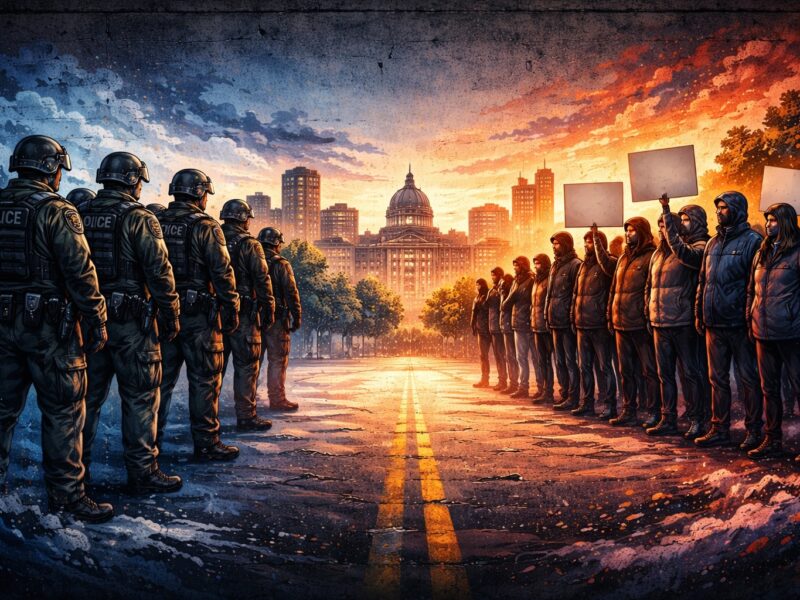
A Weapons Freak Analysis of Carry Law, Public Demonstrations, and Situational Reality
(This listing examines weapons context and safety — not political positions.)
Why This Listing Exists
When a fatal shooting occurs at a public protest and a legally carried firearm is involved, the conversation online almost always collapses into tribal arguments.
This listing does something different.
It examines the situation through the lens of firearm carry law, protest environments, and real-world decision-making— separate from politics, slogans, or social-media outrage.
What is undisputed in cases like this is simple:
-
A person is dead
-
A firearm was present
-
Law enforcement was present
-
A public demonstration was underway
That combination alone deserves careful, unemotional analysis — before anyone picks a side.
I am not giving legal advice here.
I asked AI to research these questions because I wanted answers without the emotional distortion that social platforms inject into situations like this. I’m sharing those findings here because they matter to anyone who carries — or is thinking about carrying — a firearm in public spaces.
The Core Questions Most People Never Ask
This listing focuses on two practical questions that matter far more than slogans or opinions:
1️⃣ Can you legally bring a concealed firearm to a public protest?
2️⃣ Does that answer change if federal law enforcement is actively working at that protest?
The answers aren’t ideological.
They’re legal — and situational.
Question 1: Can You Legally Carry a Firearm at a Public Protest?
Short answer:
👉 Sometimes, yes — but it depends on state law and location.
In many states, a public protest by itself is not automatically a gun-free zone. However, legality depends on several factors:
-
State carry law (permit vs. permitless carry)
-
Specific prohibited locations defined by statute
-
Whether the protest is on public or private property
-
Whether the area is posted as firearm-restricted
-
Whether emergency orders or special restrictions are in effect
In general:
-
Carrying a concealed firearm in a public space may be legal
-
Carrying at a permitted protest may still be legal
-
Carry becomes illegal in specific restricted locations, such as:
-
Courthouses
-
Federal buildings
-
Certain government facilities
-
Some event-permitted spaces (depending on state law)
-
Key takeaway:
A protest itself does not automatically make carry illegal — location matters more than the event.
Question 2: What If Federal Law Enforcement Is Present?
This is where many people make dangerous assumptions.
The presence of federal law enforcement alone does NOT automatically create a gun-free zone.
However — it radically changes risk, interpretation, and outcome.
Important distinctions:
-
Being near federal officers ≠ being inside a federal building
-
A street is not a courthouse
-
A sidewalk is not a secured federal facility
That said:
⚠️ Legal carry does not equal legal interference.
Even if a firearm is lawfully carried:
-
Interfering with law enforcement operations can be illegal
-
Obstructing, resisting, or physically engaging officers escalates rapidly
-
Officers cannot know your intent in real time
-
Officers must assume worst-case scenarios in chaotic environments
At protests, context collapses fast:
-
Crowds compress
-
Commands overlap
-
Stress spikes
-
Visibility drops
-
Decision windows shrink to seconds
A firearm that is legal in isolation can become legally and physically dangerous in context.
What Carry Training Often Doesn’t Emphasize Enough
Most concealed-carry training focuses on:
-
Legal possession
-
Safe handling
-
Defensive use scenarios
Very few courses spend real time on:
-
Crowd dynamics
-
Protest environments
-
Law-enforcement response psychology
-
Misidentification risk
-
Escalation through proximity
Carrying legally does not guarantee:
-
Safety
-
Protection
-
Or favorable interpretation after the fact
Especially in politically charged environments.
Rights vs. Reality in Chaotic Spaces
You may have the legal right to carry.
You do not have the right to:
-
Insert yourself into enforcement actions
-
Interfere with arrests
-
Physically engage armed officers
-
Assume others can distinguish intent under stress
Rights do not pause physics, fear, or reaction time.
Once a situation turns physical, legal nuance disappears in the moment.
A Real-World Parallel Most People Understand
Let’s step away from protests for a moment and look at a situation almost everyone can visualize.
Imagine you’re driving home and you’ve been getting speeding tickets in the mail for a road you drive every day. The posted limit is 35 MPH, but in your mind, it should be 55.
One afternoon, you see a police officer on the side of the road pulling someone over for speeding on that same stretch.
You’re frustrated.
You think the officer is wrong.
You think the law itself is wrong.
So you pull over.
You get out of your car.
You start filming.
You tell the officer they shouldn’t be writing the ticket.
Other people slow down. Someone else starts recording.
Now ask yourself honestly:
-
Does that situation calm down… or escalate?
-
Does the officer see you as “making a point” — or as interference?
-
Does your intent matter in that moment?
Now add one more variable:
You’re legally carrying a concealed firearm.
Nothing about your legal right changes.
But everything about the situation does.
That’s how fast context shifts.
And protests are far more chaotic than roadside stops.
Why This Case Matters
Across the country, people have been killed or injured in moments where:
-
Stress was high
-
Information was incomplete
-
Weapons were present
-
Decisions were made in seconds
In Minnesota, two constitutional rights collided in the same physical space.
What People Mean When They Say “Two Constitutional Rights Collided”
When people say “two constitutional rights collided” in situations like this, they’re referring to:
The First Amendment
The right to free speech and peaceful assembly — including the right to protest.
The Second Amendment
The right to keep and bear arms — including lawful firearm ownership and carry, depending on state law.
Individually, these rights are protected.
But the Constitution does not guarantee that exercising two rights at the same time, in the same physical space, will be risk-free.
Especially when:
-
Law enforcement is actively working
-
Crowds are present
-
Stress and confusion are high
-
Weapons are involved
In real-world environments, rights don’t operate in isolation.
They operate inside physics, perception, fear, and split-second decision-making.
That’s where theory meets reality.
Regardless of political beliefs, the outcome should give every gun owner pause.
Democrats own guns.
Republicans own guns.
Risk does not ask for party affiliation.
Why This Listing Belongs on Weapons Freak
This is not a marketplace post.
This is not a political argument.
This is not an endorsement of any side.
This is a weapons-culture case study.
Weapons Freak exists to host:
-
Hard questions
-
Real-world scenarios
-
Lessons that don’t fit into social media formats
-
Stories that stay live and don’t get buried
This listing is a parking spot for:
-
Firearm owners
-
Concealed carriers
-
Trainers and instructors
-
People who want context instead of slogans
Final Thought (Read This Twice)
A firearm carried legally can still place you in an illegal, irreversible situation — based entirely on environment and timing.
The goal of carry is survival.
The goal of awareness is avoidance.
If this listing made you pause, question assumptions, or rethink where and when you carry…
Then it did its job.
Why This Page Exists at All
This story isn’t here to provoke outrage or chase engagement.
It’s here because this page is long-term placement, not a disposable post.
No ads are running on this page.
No comment section.
No algorithm feeding it to people who just want to fight.
I placed this story because situations like this deserve context, not slogans.
Weapons culture includes responsibility, law, training, mistakes, consequences, and hard conversations — not just gear and opinions.
About the Author
John Boyd — The Cool Car Guy, The Sales Freak
Auto consultant based in New Mexico
20+ years sourcing vehicles nationwide
$50M+ in transactions
Looking for your next ride without the drama of a traditional dealership?
Drop him a message.
This story is the commentary.
The listings are where the work happens.
(Illustration created for editorial storytelling purposes.)