
The ‘Too Many Guns to Invade America’ Claim: Deterrence, Myth, and Modern Reality
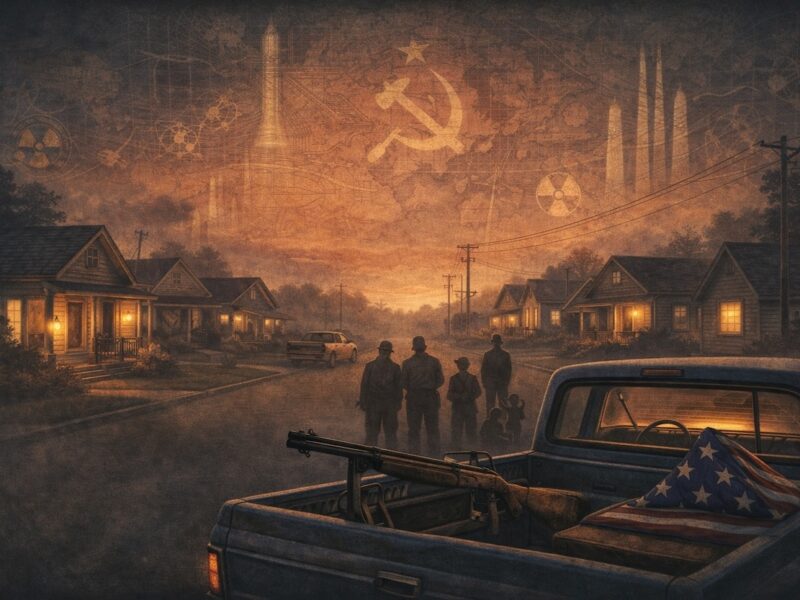
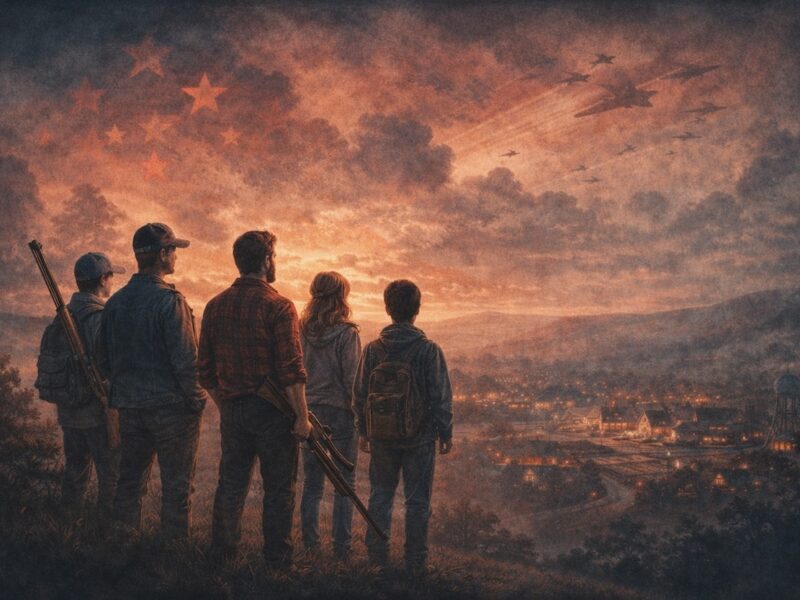
Will America Never Be Invaded Because “The People Have Too Many Guns”?
Myth, Memory, and the Culture That Made It Feel True
A Weapons Freak analysis of deterrence, weapons culture, and how history turned a rumor into a belief.
(This listing examines weapons context and culture — not political positions or legal advice.)
Why This Listing Exists
There’s a line almost every American has heard at some point:
“America will never be invaded because the people have too many guns.”
Some people swear it came from a Russian president.
Others say it was a Japanese admiral during World War II.
Some insist it’s classified military doctrine that “everyone knows.”
But here’s the real question:
Why does this idea feel true — even if no one can prove it was ever said?
That’s what this listing examines.
Not as a political argument.
Not as a call to arms.
But as a weapons-culture myth — shaped by history, fear, movies, and memory.
This belief has lived for generations — showing up in movies, internet debates, gun shops, and everyday conversation — often repeated as fact even when no one can source it.
That alone makes it worth examining.
The Quote Everyone Knows — and No One Can Source
Let’s start with the uncomfortable truth:
There is no verified historical record of a Russian or Japanese leader formally stating that America could not be invaded because of civilian gun ownership.
Over the years, the quote has been attributed to:
-
Japanese Admiral Isoroku Yamamoto
-
Joseph Stalin
-
Nikita Khrushchev
-
unnamed “Russian generals”
-
Cold War intelligence briefings
Yet no primary document exists.
And that actually makes the story more interesting, not less.
Because when an idea spreads this far without a source, it means something deeper is happening.
Why the Myth Took Root After World War II
After World War II, the United States emerged as something the world had never seen:
-
economically dominant
-
militarily unmatched
-
geographically isolated
-
industrially intact
Europe was rebuilding.
Japan was rebuilding.
The Soviet Union was powerful — but wounded.
And America had:
-
oceans on both sides
-
a massive standing military
-
millions of combat veterans returning home
-
a civilian population already familiar with firearms
This wasn’t theory.
It was lived reality.
The U.S. didn’t just win the war — it emerged as the world’s first modern superpower.
That mattered.
Cold War Fear Became Cultural Memory
Then came the Cold War.
Children practiced hiding under desks during nuclear drills.
Families built fallout shelters.
Television, schools, and news reinforced one idea:
The world is dangerous — and America must be ready.
That fear didn’t stay in policy papers.
It moved into culture.
People didn’t just trust the military.
They trusted themselves.
Firearms weren’t fringe.
They were normal.
Movies Turned Fear Into Story
By the 1980s, Cold War anxiety had fully merged with entertainment.
Movies didn’t just reflect fear — they trained imagination.
-
Red Dawn showed teenagers resisting invading armies
-
WarGames showed a kid almost starting nuclear war from his bedroom
-
Rambo-era films reframed Vietnam into personal redemption through force
The message wasn’t subtle:
If something goes wrong… the people fight back.
For an entire generation, invasion wasn’t a theory.
It was a plot line.
And plot lines stick.
“Tear Down This Wall” and Superpower Identity
When Reagan told Gorbachev to “tear down this wall,” it wasn’t just diplomacy.
It was theater.
It was symbolism.
It was identity.
America wasn’t just strong — it believed it was unbreakable.
That belief mattered.
Because deterrence isn’t only about weapons.
It’s about perception.
And perception is cultural.
America as a Superpower Didn’t Just Change Politics — It Changed Belief
At this point, it’s worth pausing — because this idea didn’t come from nowhere.
After World War II, America wasn’t just a nation.
It was something closer to Rome 2.0.
It still is — arguably more than ever.
Economic power.
Military dominance.
Cultural influence.
Global reach.
That identity didn’t just shape foreign policy — it has shaped how Americans see themselves.
I actually unpack this idea from a spiritual and cultural angle in a book I wrote called
Wicked Darkness: Johnny’s Survival Guide to the End Times.
It’s a sarcastic, uncomfortable, very non-mainstream look at:
• America as a modern empire
• power, belief, and identity
• why people cling to certain myths when the world feels unstable
• where it’s all heading from a Biblical perspective.
It’s definitely not for everyone, but if you’re curious, you can find it as a PDF at WickedDarkness.com or dig it up on Amazon if you’re motivated enough.
And yes — I’m intentionally plugging my own book in the middle of this listing.
Why?
Because that’s part of what this site demonstrates.
On Weapons Freak, I don’t need permission from an algorithm.
I don’t need to hope a platform “allows” cross-promotion.
I don’t need to worry about reach, throttling, or shadow bans.
This listing is a parking spot — and I can park anything I want here:
• an idea
• a product
• a business
• a perspective
• as long as it relates to the listing, so you don’t bore your readers.
Now back to the myth.
Could the Idea Have Been Somewhat True — Then?
Here’s where nuance matters.
In the mid-20th century:
• Large-scale invasions were brutally expensive
• Occupying hostile civilian populations was slow and costly
• Guerrilla resistance complicated long-term control
An armed population doesn’t stop invasion.
But it complicates occupation.
The Vietnam War proved that in real time.
And decades later, so did Afghanistan.
In both cases, overwhelming military superiority won the initial conflict — but could not easily control territory once local resistance became decentralized, persistent, and embedded in civilian life.
That distinction matters.
And it likely helped feed this belief — even if no one ever said the quote out loud.
Would Civilian Guns Stop an Invasion Today?
This is where the myth breaks.
Modern warfare isn’t decided by rifles.
It’s decided by:
-
air superiority
-
missiles launched from land and sea
-
satellites
-
cyber systems
-
infrastructure disruption
-
economic and logistical collapse
In modern conflict, outcomes are shaped long before civilians engage.
Civilian firearms still matter culturally.
They still matter psychologically.
They still matter in occupation scenarios.
But they are not the deciding factor in invasion.
The myth survived longer than the conditions that created it.
Why the Myth Still Lives
So why does the quote keep coming back?
Because it does three powerful things:
-
It reassures — danger feels manageable
-
It simplifies — complex war becomes one sentence
-
It reinforces identity — independence, self-reliance, readiness
That’s not military doctrine.
That’s culture.
Weapons Culture Is More Than Hardware
This story isn’t about proving or disproving a quote.
It’s about understanding why people believe it.
Weapons culture includes:
-
history
-
memory
-
fear
-
movies
-
veterans’ stories
-
lessons passed down at kitchen tables
-
beliefs that feel true even when facts are fuzzy
That’s the real subject here.
Weapons Manufacturers Help Propagate The Myth
Let’s be honest about sales and marketing for a minute. A population of more than 300 million people in the United States with an estimate of just as many guns or more doesn’t happen in a vacuum.
The U.S. gun industry is a substantial economic driver, with an estimated total economic impact of $91.7 billion in 2024. It supports roughly 383,000 full-time jobs. The industry has experienced significant growth, with its impact rising from $19.1 billion in 2008 to over $91 billion in 2024, driven by high demand for firearms and ammunition.
When cultural myths reinforce fear or identity, they naturally become powerful marketing fuel — whether intentionally designed that way or not.
I’m not making a judgment call here, just an observation from my background in sales and marketing. Most industries don’t have this same cultural impact as the gun and weapons impact.
There are very few industries today that are tied directly to the Constitution that grants people the “right to bear arms”. Free speech is another example and that allows sites like this one to exist and other media companies that are some of the most powerful companies on the globe.
Why This Listing Belongs on Weapons Freak
This isn’t a marketplace post.
This isn’t a hot take.
This isn’t a political argument.
It’s a culture case study.
Weapons Freak exists to host:
-
hard questions
-
long-form context inside a classified-style parking spot
-
ideas that don’t survive comment sections
-
stories that stay live instead of disappearing
This is placement for thought — not outrage.
Final Thought
America may never be invaded for many reasons.
“I sit a queen, and am no widow, and shall see no sorrow” – Revelation 18:7
That verse is about perceived invincibility — and history has a habit of humbling it.
Civilian gun ownership is part of the cultural story — not the whole explanation.
But when a belief lasts this long, it deserves examination.
Not to mock it.
Not to weaponize it.
But to understand it.
That’s what weapons culture really is.
And now, the next time someone says:
“America will never be invaded because the citizens have too many guns,”
you’ll know whether that’s fact, fiction, or just a very powerful story.
And one more quick thought. This entire listing cost $49.95 to place, which includes a total of five listings that I can create like this one — and it now permanently advertises my thinking, my book, and my businesses without running a single ad.
About the Author
John Boyd — The Cool Car Guy, The Sales Freak
Auto consultant based in New Mexico
20+ years sourcing vehicles nationwide
$50M+ in transactions
Looking for your next ride without the drama of a traditional dealership?
Drop him a message.
Want more info: Just click the link under the profile.
This story is the commentary.
The listings are where the work happens.
(Illustrations created for editorial storytelling purposes.)