
THE NEW BULLSEYE: How AI Data Centers Put Rural America on the Strategic Map
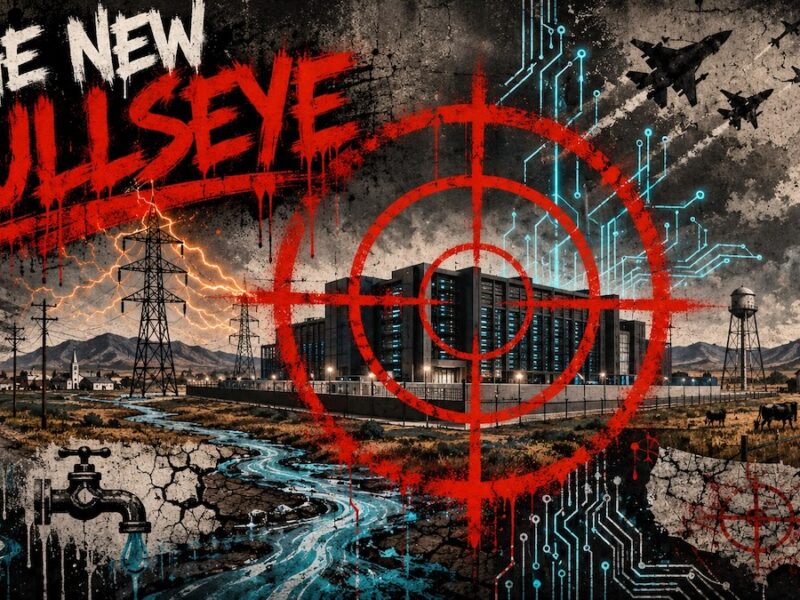
⚡ THE NEW BULLSEYE
WHY RURAL AI DATA CENTERS CHANGE AMERICA’S STRATEGIC MAP
A WeaponsFreak.com Commentary Parking Spot
For decades, Americans assumed that if conflict ever reached U.S. soil, the targets would be obvious: major cities, military bases, ports, command centers, and industrial hubs. Places like Colorado Springs — with NORAD buried inside Cheyenne Mountain — were understood as strategic assets. Everyone knew why they were targets. Everyone understood the logic.
But the strategic landscape has changed.
And almost nobody is talking about it.
⭐ THE INFRASTRUCTURE THAT QUIETLY MOVED
Over the last decade, tech companies have shifted enormous amounts of critical infrastructure out of major metropolitan areas and into rural towns — places like Socorro, NM.
Why?
- Cheaper land
- Lower construction costs
- Easier permitting
- Less political resistance
- Massive space requirements
- Lower energy costs
- Lower public visibility
It’s not mysterious. It’s economics.
But the strategic consequences are enormous — and they go far beyond what people are arguing about today.
⭐ THE WATER ISSUE
AI data centers consume staggering amounts of water for cooling. Not thousands of gallons — millions.
In rural areas:
- Water tables are fragile
- Agriculture depends on stable supply
- Ranchers rely on predictable access
- Small towns don’t have surplus capacity
- Drought cycles hit harder and last longer
When a data center arrives, it doesn’t ask permission from the ecosystem. It simply consumes.
And when water becomes scarce, rural communities pay the price — not the tech companies.
⭐ THE ELECTRICITY ISSUE
AI compute isn’t just heavy — it’s massive.
A single large data center can consume:
- As much electricity as a small city
- Enough power to strain rural grids
- Enough load to require new substations
- Enough demand to raise local rates
Who pays for the upgrades?
Not the tech companies.
Not the investors.
Not the executives.
The local community pays — through higher rates, new taxes, and infrastructure bonds.
Rural residents end up subsidizing the very infrastructure that changes their risk profile.
⭐ WHO’S REALLY PAYING FOR ALL THIS “TECH”?
People think tech companies are paying for these data centers.
They’re not.
The cost is quietly distributed across:
- Local taxpayers
- Rural utility customers
- State incentive programs
- Federal subsidies
- Infrastructure grants
- Energy‑development credits
The public pays for the roads. The public pays for the power upgrades. The public pays for the water infrastructure. The public pays for the land use changes.
Tech companies pay for the building — and then extract value from the community forever.
⭐ CRITICAL INFRASTRUCTURE IS ALWAYS A TARGET
This is not controversial. This is not political. This is not fear‑mongering.
It’s basic military strategy.
In any large‑scale conflict, adversaries target:
- Communications
- Finance
- Command and control
- Data continuity
- Cloud infrastructure
- AI operations
- National‑level digital systems
Not because they want to harm civilians — but because these systems matter.
And here’s the part nobody is thinking about:
When you move critical infrastructure into rural America, you also move the bullseye.
⭐ RURAL COMMUNITIES DIDN’T SIGN UP FOR THIS
People move to rural areas for:
- Space
- Quiet
- Safety
- Distance from major targets
- A buffer from urban vulnerabilities
But when a massive AI data center drops into the middle of that landscape, the strategic profile of the area changes overnight.
Suddenly, a town that was never on any adversary’s radar becomes home to infrastructure that absolutely would be.
Not because anyone wants to target rural communities — but because the infrastructure itself is strategically valuable.
⭐ DATA CENTERS AREN’T JUST BIG BUILDINGS
They are the backbone of:
- AI training and inference
- Cloud storage
- Financial transactions
- Government systems
- Corporate operations
- National digital continuity
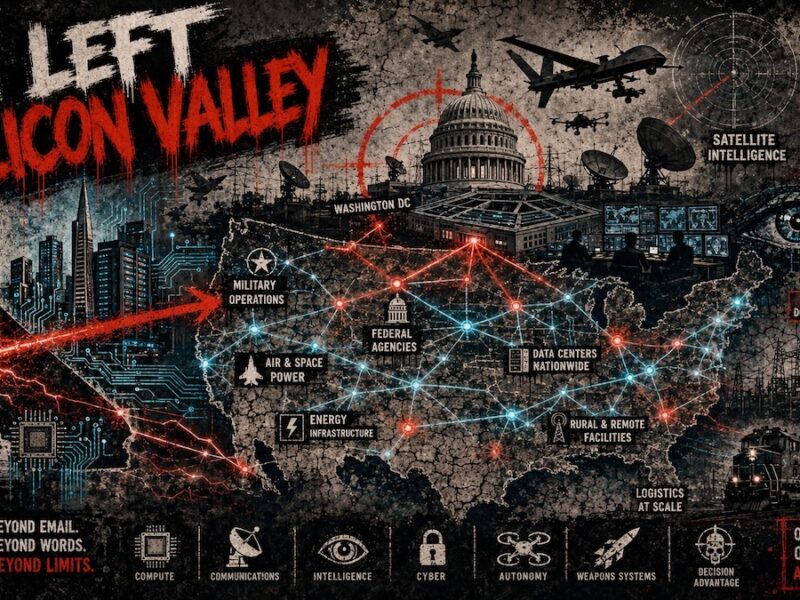
- Modern military operations
And that last one is the part almost nobody is talking about.
⭐ THE MILITARY NOW RUNS ON AI
Today’s military isn’t just using AI — it’s dependent on it.
AI supports:
- Target recognition
- Logistics optimization
- Satellite analysis
- Threat detection
- Cyber defense
- Intelligence processing
- Autonomous system coordination
- Battlefield decision‑support tools
This doesn’t mean AI is “running the military,” but it does mean the military relies on massive compute power to operate at modern speed.
And where does that compute power live?
In data centers. Increasingly in rural America.
This is the strategic shift nobody has processed yet.
⭐ A TARGET THAT DIDN’T EXIST 20 YEARS AGO
During the Cold War, adversaries focused on:
- Missile silos
- Air bases
- Naval ports
- Command bunkers
- Industrial hubs
- Strategic cities
Everyone understood the map.
But now?
Critical military‑adjacent infrastructure — the digital backbone — is sitting in:
- Small towns
- Rural counties
- Agricultural regions
- Remote desert communities
- Mountain valleys
These places were never considered targets before. Now they host infrastructure that adversaries must consider.
Not because anyone wants to harm rural communities — but because the infrastructure itself is strategically valuable.
⭐ THE DIGITAL EQUIVALENT OF POWER PLANTS
AI data centers are the modern equivalent of:
- Power plants
- Refineries
- Communication hubs
- Rail chokepoints
- Industrial complexes
Except they’re often placed in areas with:
- No hardened protection
- No strategic planning
- No public awareness
- No political debate
- No historical precedent
Rural communities are being asked — quietly — to host infrastructure that carries national‑level importance.
And they’re not being told what that means.
⭐ THE STRATEGIC IMPLICATIONS
When you place AI‑critical infrastructure in rural areas:
- You shift the bullseye
- You redistribute risk
- You redraw the strategic map
- You create new points of vulnerability
- You expose communities that never expected it
- You decentralize targets across the country
This isn’t speculation.
This is how modern conflict works.
And it’s happening without public discussion, without strategic transparency, and without acknowledging the implications for the communities involved.
⭐ THIS IS NOT ANTI‑TECH
I use AI every day for FreakSites.com and CoolCarGuy.com.
AI helps people build businesses, tell stories, and create income streams.
This is not about rejecting technology.
It’s about acknowledging reality.
If rural communities are going to host critical national infrastructure, they deserve an honest conversation about what that means — not just marketing language about “economic development.”
⭐ ANSWERING THE OBJECTIONS PEOPLE THINK THEY HAVE
Most people view AI in a vacuum — as if it exists in a peaceful, cooperative, global sandbox where everyone plays nice and follows the same rules.
But that’s not the world we live in.
Let’s walk through the objections one by one.
⭐ “AI is for progress — not conflict.”
People say:
- “AI will help us go to Mars.”
- “AI will revolutionize medicine.”
- “AI will make work easier.”
All more than likely true.
But AI also exists in a world where:
- Nations compete
- Governments spy
- Militaries modernize
- Conflicts escalate
- Adversaries innovate
- Human nature doesn’t change
AI isn’t just a tool for progress.
It’s a tool for power.
And power is always contested.
⭐ “We’ll regulate AI here in the U.S.”
Maybe.
But even if the U.S. puts guardrails on AI, that doesn’t mean:
- China will
- Russia will
- North Korea will
- Iran will
- Any adversarial nation will
You can regulate AI inside your borders.
You cannot regulate AI inside someone else’s.
And that means the global AI landscape will always be uneven, unpredictable, and strategically volatile.
⭐ “Other countries won’t use AI for conflict.”
Look at the world.
Ukraine is right next to Russia.
How’s that going?
Iran is in conflict with the United States.
How’s that affecting fuel prices?
North Korea tests missiles.
China builds islands in the South China Sea.
Russia runs cyber operations.
Iran funds proxy groups.
China invests billions in military AI.
These nations aren’t thinking about AI as a productivity tool to write better emails.
They’re thinking about AI as:
- A strategic advantage
- A military multiplier
- A geopolitical weapon
- A force equalizer
- A cyber capability
- A battlefield accelerator
AI isn’t just “the future of work.”
It’s the future of conflict.
⭐ “AI won’t reach singularity — that’s sci‑fi.”
People say:
- “Singularity is science fiction.”
- “That’s Terminator stuff.”
- “SkyNet isn’t real.”
But the same people carry a supercomputer in their pocket — something that was science fiction 40 years ago.
And when Sam Altman says on a podcast (Friday, July 25th) that AI has hit a point resembling singularity?
People should pay attention.
Not because AI is going to “wake up,” but because:
AI is accelerating faster than human institutions, governments, and societies can adapt.
That’s the real singularity.
And that’s why the infrastructure powering AI — especially when placed in rural America — matters more than anyone realizes.
⭐ “Data centers are harmless buildings.”
No.
They are:
- Water‑hungry
- Power‑hungry
- Subsidy‑hungry
- Infrastructure‑hungry
- Strategically critical
- Militarily relevant
- Geopolitically significant
They are not neutral. They are not passive. They are not harmless.
They are the backbone of:
- AI
- Finance
- Government
- Corporate operations
- National digital continuity
- Modern military capability
And when you place that backbone in rural America?
You place the bullseye there too.
⭐ “This is overblown — nobody will target rural America.”
People said the same thing about:
- Pipelines
- Power grids
- Communication hubs
- Industrial plants
- Rail chokepoints
Until they became targets.
Critical infrastructure is always a target — regardless of where it sits.
And now?
Critical infrastructure sits in:
- Small towns
- Farming communities
- Mountain valleys
- Desert regions
- Rural counties
Places that were never targets before.
Now they are.
⭐ “This is just tech — it’s not about war.”
Technology has always been about war.
- Radar
- GPS
- Satellites
- Drones
- Encryption
- The internet itself
All began as military technology.
AI is simply the next chapter.
And the infrastructure powering AI — especially when placed in rural America — is part of that chapter whether people want to admit it or not.
⭐ “This won’t affect me.”
Newsflash: It already does.
AI affects:
- Your electricity rates
- Your water supply
- Your taxes
- Your local infrastructure
- Your community’s risk profile
- Your national security
- Your economic stability
- Your geopolitical environment
People think AI is just a productivity tool.
It’s not.
It’s a global force reshaping:
- Economics
- Warfare
- Diplomacy
- Industry
- Society
- Risk
- Vulnerability
- Power
And rural America is being asked — quietly — to host the backbone of that force.
⭐ THIS IS WHY THE CONVERSATION MATTERS
People aren’t thinking about:
- Global conflict
- Adversarial nations
- Military AI
- Infrastructure vulnerability
- Strategic redistribution
- Human nature
- Geopolitical reality
- The pace of technological acceleration
They’re thinking about:
- Better emails
- Better social media posts
- Better productivity
- Better convenience
AI is not a vacuum.
AI is not isolated.
AI is not neutral.
AI exists in the real world — a world full of nations, conflicts, ambitions, and adversaries.
And the infrastructure powering AI is being placed in rural America.
That’s the part nobody is thinking about.
Until now.
⭐ THIS IS A WEAPONS‑CULTURE DISCUSSION
WeaponsFreak.com exists to explore:
- Preparedness
- Infrastructure vulnerability
- Strategic analysis
- Civilian risk distribution
- Modern conflict realities
- How technology changes the battlefield
This topic belongs here.
It’s not about fear.
It’s about awareness.
It’s about understanding how the strategic map of America is being redrawn — quietly, rapidly, and without public discussion.
⭐ WANT TO SHARE YOUR OWN ANALYSIS?
WeaponsFreak.com gives you a full‑page Parking Spot for $7 — no subscription, no renewal, no expiration.
Your page. Your voice. Your analysis.
Then add StoryDrive™ if you want guaranteed views delivered to your Parking Spot.